
Tuesday, January 18, 2011
Milton Rogovin- 1909-2011

Thursday, September 16, 2010
Aborigines on display in Austin

Two vintage photographs of Aborigines visiting New York City in 1981 are on display at the Champion Contemporary Art Galley in a show called "Interrupted Landscapes." The gallery is located at 800 Brazos Street in Austin, Texas.
Friday, February 19, 2010
THE LAST NEW YORKER at The Quad
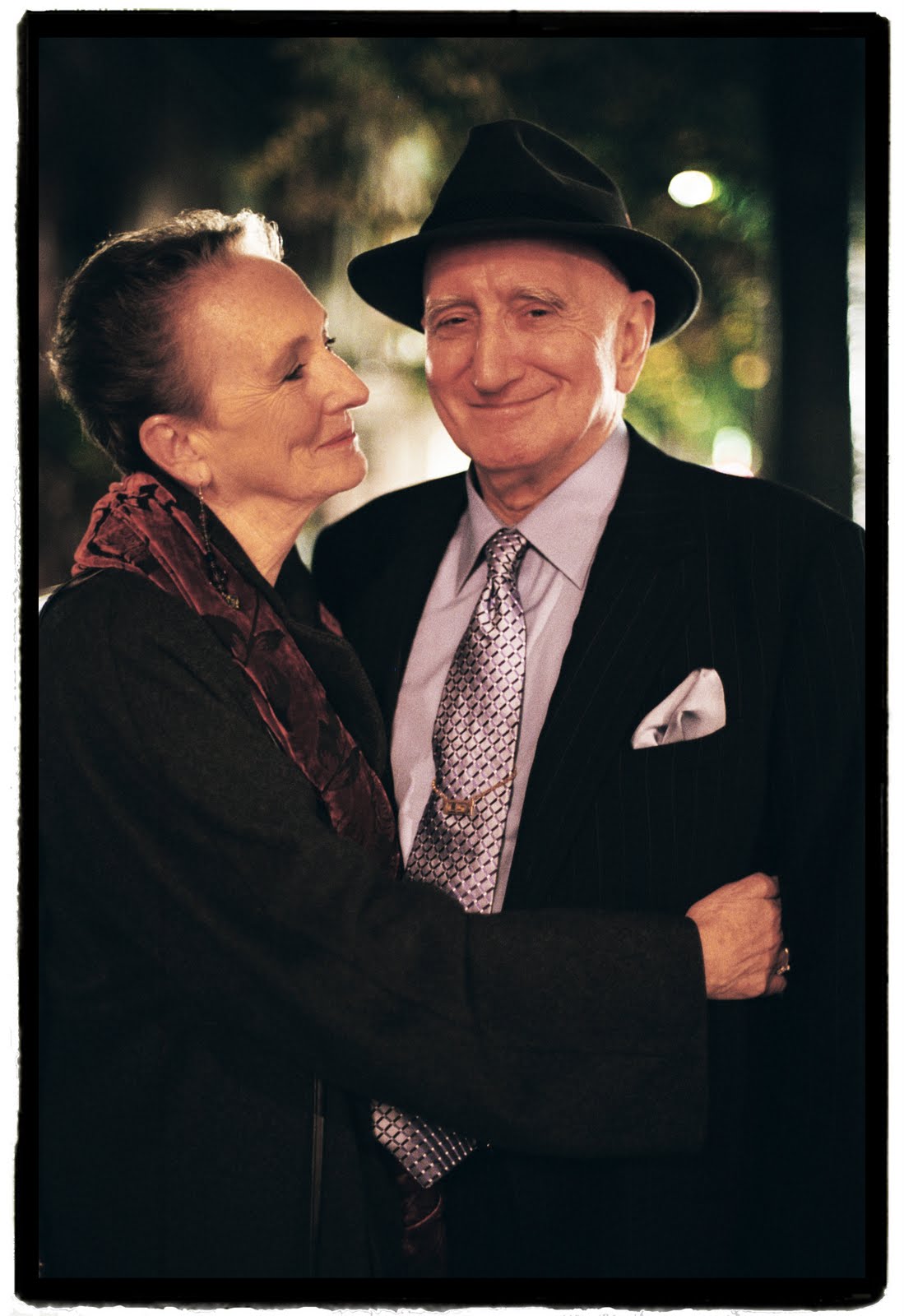
THE LAST NEW YORKER at the Quad Cinema in New York City February 19-25.
The Last New Yorker is actually a daring piece of work.
--The New Republic, Stanley Kauffmann
It's hard not to be moved by a film so hopelessly sweet.
---L Magazine.com, Henry Stewart
The best thing about this tiny independent film is its evocation of the relentless speed with which the city tears down and rebuilds itself, driving out older, less affluent residents.
--The New York Times, Stephen Holden
Friday, September 25, 2009
THE LAST NEW YORKER WINS

Thursday, August 27, 2009
Gelf Magazine's "Non-Motivational Speaker Series"
Harvey Wang will be featured at the monthly Gelf Magazine "Non-Motivational Speaker Series." New York Stories is the theme for this month's event. The slide show and talk is entitled "My Lost New York, and The Last New Yorker." 
Doug Quint, proprietor of the Big Gay Ice Cream Truck and Salvatore "Buddy" Scotto, owner of the Scotto Funeral Home and unofficial mayor of Carroll Gardens, Brooklyn will also speak.
Location: JLA Studios
63 Pearl St (between Water St. and Front St.)
Brooklyn, NY 11201
Doors open at 7:00. Event starts at 7:30. FREE!

Doug Quint, proprietor of the Big Gay Ice Cream Truck and Salvatore "Buddy" Scotto, owner of the Scotto Funeral Home and unofficial mayor of Carroll Gardens, Brooklyn will also speak.
Location: JLA Studios
63 Pearl St (between Water St. and Front St.)
Brooklyn, NY 11201
Doors open at 7:00. Event starts at 7:30. FREE!
Wednesday, July 15, 2009
Awarded Alfred P. Sloan Grant
Harvey Wang has received a grant from the Alfred P. Sloan Foundation to research and shoot a project that explores the transition of photography from a chemical process to a digital one. The work will be published as a book, and a companion film is also being made.
Friday, October 24, 2008
Sun-Sentinel gives THE LAST NEW YORKER 4 Stars

FLIFF SCHEDULES ANOTHER EXCITING LINEUP
Here's a look at a few of the titles at this year's FLIFF, reviewed on a five-star scale.
The Last New Yorker: ****
There's an old-fashioned, romantic charm to "The Last New Yorker," appropriate for a movie about an old-fashioned romantic who feels increasingly displaced in modern society, or at least the modern streets of New York. Aging, long-divorced Lenny Sugarman (Dominic Chianese) spends his retirement days having breakfast with best friend Ruben (Dick Latessa) and kvetching about the wonderful city he grew up in and the shell of its former self they now inhabit. His life changes when his stockbroker nephew (John Hamilton) informs him that he's penniless, the result of a series of ill-advised financial decisions. At the same time, he meets Mimi (Kathleen Chalfant), an elegant lady who steals his heart. Lenny is determined to remain self-sufficient in his twilight years, rejecting his nephew's offer for financial help and instead masquerading as a stockbroker himself. This lament for a lost New York is that rare find in the movie industry: a central, dynamic vehicle for a senior citizen actor.
Wednesday, October 8, 2008
THE LAST NEW YORKER Festival Screenings

Harvey Wang's first feature film, "The Last New Yorker" starring Dominic Chianese, Dick Latessa and Kathleen Chalfant will be screened at two upcoming festivals: BendFilm (Bend, Oregon) on October 10, 2008 and Ft. Lauderdale International Film Festival on October 24, 25, 26 & 27, 2008.
Visit the website: www.lastnewyorker.com
Thursday, May 1, 2008
Spotlight in BLACK AND WHITE magazine


A portfolio of images from "Flophouse: Life on the Bowery" is featured in "Black and White"a magazine for collectors of fine photography. Below is the profile written by Dean Brierly:
For the past 30 years, Harvey Wang has photographed America’s outcasts, eccentrics, dreamers and iconoclasts. The photographer himself, however, prefers a simpler word: individuals.
“What fascinates me is that anyone and everyone is an outsider, a loner or a misfit, and the fact that those words are often meant pejoratively shows how far our society will go to punish people for nonconformity,” he says. “My interest is in the exquisiteness of individuality, and its implications for how we should live.”
That commitment to the singularity inherent in us all has informed a body of work that includes five books that cast revealing light on little-seen corners of life in America. Arguably the most emotionally charged of these is Flophouse: Life on the Bowery (Random House, 2000), from which the images on these pages are taken. Flophouse depicts with great sensitivity inhabitants of the last skid row lodging houses in New York City. Wang’s collaborators, oral historians Dave Isay and Stacy Abramson, interviewed residents in four such institutions while Wang took their portraits. The book focuses on a segment of society many would prefer to pretend doesn’t exist, yet Wang disclaims any political subtext.
“On one level, I was seeking to show the beauty of these simple places that are on the verge of oblivion. But more importantly, I wanted to show the humanity of a population that was largely shunned by the people of this city. What we learned from the residents of the flophouses was that in some cases, all it took was a small setback — like the loss of an apartment or a job or a divorce — to precipitate a devastating downward spiral. Within months, one could easily find oneself in dire circumstances without any safety net.”
As in virtually all of his work, Wang’s visual approach is grounded in simplicity. He doesn’t editorialize or impose his viewpoint on his subjects, but lets them define the parameters of how much they want to reveal. Wang earns their trust and respect, makes them feel comfortable in front of his camera, and ultimately allows them to decide where and how to pose. The resulting portraits resonate with rare honesty, revealing weakness as well as strength and, in the case of the flophouse series, a surprising range of attitudes regarding their lot in life.
Resident “Fat Anthony” gazes out of a grilled window at a bleak cityscape with an enigmatic expression that seems poised between resignation and longing. “Tattooed Man” provides a contrast of fierce pride and defiance that betokens a refusal to go quietly into that good night. Images like “Man on Stairs” and “Paul, Andrews Hotel” project varying degrees of melancholy, disquiet and acclimation.
“The residents of the flophouses become like family to each other,” notes Wang. “Some of the men are clearly ‘passing through,’ but for those who see themselves as permanent residents, it’s a difficult and painful life. The flophouses could be dangerous places, rife with drug and alcohol abuse, where residents could be robbed, hurt or even killed. I was awed by many of the men we met who found the strength to subsist in those circumstances, and those who found ways to protect their hope and pride. It was humbling.”
Born in Queens, New York, in 1956, Wang determined from an early age to use photography as a passport with which to explore wider geographic, social and cultural horizons. While a student at the State University of New York at Purchase, he embarked on a photo project in the Appalachian Mountains that depicted the impact of mass culture on folk traditions. He has remained faithful to the theme of the individual’s relationship to society through his photographic endeavors, award-winning film and television projects, and even commercial assignments.
“What has influenced my development most as a photographer is my feeling that rampant egoism, unbridled and amoral consumerism, and materialism are eroding our humanity,” Wang states. “As I was growing up, I felt a real discomfort seeing those aspects of life around me. That discomfort compelled me to seek out people and places that felt more real — people who had a different frame of reference — to celebrate that and hopefully to learn something from it.”
Friday, April 4, 2008
Goodbye Coney Island?

An exhibition of more than fifty photographs from the Brooklyn Museum’s holdings, Goodbye Coney Island? traces the evolution of this fabled part of New York over the past 125 years. Coney Island has undergone many transformations since it first became a popular resort in the nineteenth century, and in the near future a prospective redevelopment plan may yet again change this section of Brooklyn.
Goodbye Coney Island? presents images that depict the area’s early life and its landmarks and attractions from the 1870s to the present, including the Oriental Hotel, Steeplechase, Luna Park, the beach and boardwalk, and the classic Thunderbolt rollercoaster. The exhibition will include photographs by Breading Way, George Bradford Brainerd, Stephen Salmieri, Garry Winogrand, Lynn Butler, Harvey Wang and many others.
Friday, March 9, 2007
That 70s Show at Powerhouse

Eight of Harvey Wang's photographs are included in That 70s Show at the powerHouse Gallery (37 Main St., Brooklyn, NY in Dumbo). The show is an ode to a New York City long forgotten, a city on the brink of bankruptcy, rife with anarchy, brimming with unrivaled creativity and artistry. The exhibition pays tribute to the people of New York—from the pimps and the pushers to the police and the politicians, the musicians and the artists to everyday citizens—whose perseverance during these years reveals the true spirit of our city.
Harvey Wang's work is featured along with other artists including Bruce Davidson, Jill Freedman, Larry Fink, Ron Galella, Godlis, Arlene Gottfried, Bobby Grossman, Helen Levitt, Builder Levy, Christopher Makos, Susan Meiselas.
Wednesday, November 1, 2006
Harvey Wang's America exhibit

An exhibition of American images from the last 30 years at Hofstra University's Rosenberg Gallery. Calkins Hall, Hofstra University, Hempstead, New York. Mondays & Wednesdays 10-3. Tuesdays & Thursday 11-2, 4-5 and Fridays 1-5. For info call 516 463-5474
Tuesday, August 1, 2006
Exhibition: Jersey Shore '74 and '84

Harvey Wang's photographs of the Jersey Shore from 1974 and 1984 are on view at the Exhibit A gallery in Asbury Park, New Jersey.
Friday, May 19, 2006
Distinguished Alumni

Harvey Wang received the President's Award for Distinguished Alumni at the Purchase College, State University of New York, commencement ceremony on Friday, May 19. Wang created his own major while an undergraduate at Purchase, combining studies in anthropology and visual arts. His thesis exhibition in 1977 was presented by the Neuberger Museum of Art, and was the museum's first exhibition of a student's work.
Monday, February 4, 1991
Harvey Wang's New York Party in "Talk of the Town"
"New Yorker" writer Vajra Kilgour writes about the publication party for "Harvey Wang's New York" in the magazine's "Talk of the Town" section. The party was held at the last Horn & Hardart Automat on 42nd Street & 3rd Avenue. Entertainment was provided by Carmine Venezia's Italian Band from Chinatown. Many of the subjects of the book were in attendance, and even Robert Frank stopped by.


Subscribe to:
Posts (Atom)